



In Canada, and specifically Ontario, judicial appointment decisions are built around a fairly consistent set of attributes that are sought out from applicants to the bench. According to the Canadian Judicial Council and Ontario’s Judicial Appointments Advisory Committee (JAAC), applicants must possess:
- Professional excellence and legal competence: Applicants must have a demonstrated ability to do high-level legal work – analysis, advocacy, advice, and adjudicative functions – showing they can handle complex facts and law.
- Good judgment and decision-making ability: The selection committee looks for candidates that have the capacity to make sound, practical, timely decisions, keep an open mind, weigh competing evidence, and decide fairly under pressure.
- Integrity, independence, and impartiality: A judge must be trusted by the public and the profession to decide cases honestly and impartially, without favour, fear, or external influence.
- Temperament and interpersonal skills: Applicants must have “bench presence”: patience, courtesy, calm under stress, respect for participants, and the ability to manage difficult conflict without escalating it.
- Communication skills: Judges are required to possess and use strong communication. They must listen well, ask precise questions, and write reasons that are understandable and legally coherent.
But not on this list is emotional intelligence. This is often not needed in many areas of law – corporate, tax, employment, criminal, personal injury, real estate etc.
But emotional intelligence is desperately needed to settle a family law case. In family law, we often speak about “resolution” as though it is a single destination. It isn’t. There is a world of difference between a decision imposed by a judge and a settlement built by two people who still need to co-parent, communicate, and live with the consequences.
The most underappreciated reason mediation and arbitration work is not the law, the rules, or even the leverage. It is emotional intelligence possessed and utilized by the Family Mediator/Arbitrator. That is not to say that judges are uncaring or incapable. Quite the opposite: many judges are deeply conscientious. The issue is simpler and more uncomfortable: Family court is not built to supply the emotional intelligence required to settle a family case. It is built to adjudicate. Those are different functions, demanding different skills, different time horizons, and different forms of human engagement.
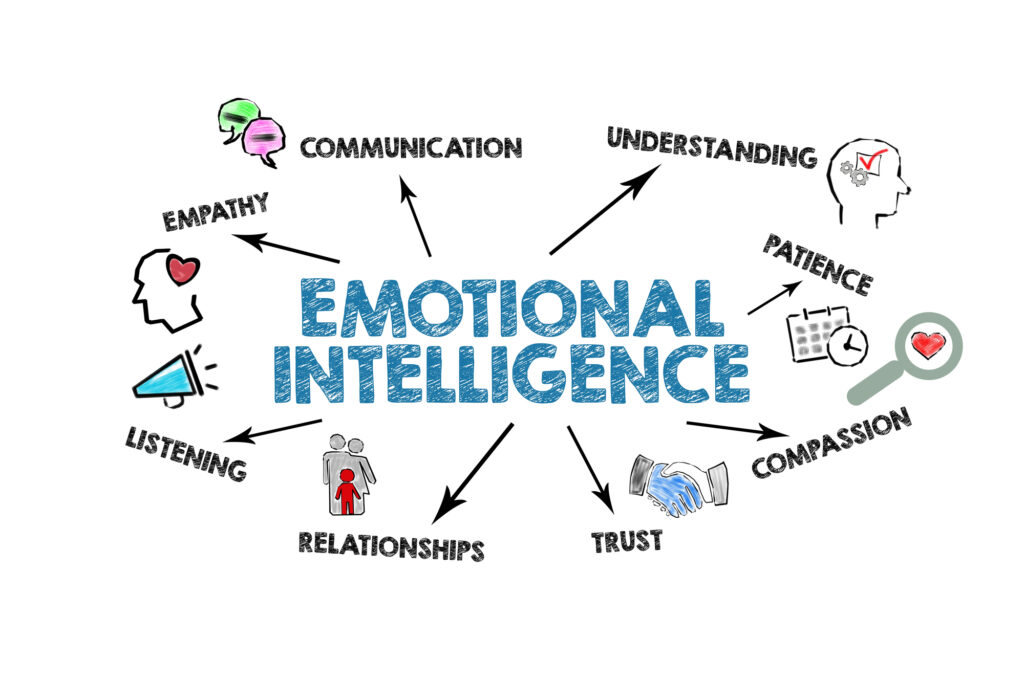
A Family Mediator/Arbitrator’s emotional intelligence (EQ) is his ability to recognize, understand, and manage the emotions of the spouses, the children and even the lawyers. Strong EQ includes:
- Self-awareness (knowing what the spouses/children/lawyers are feeling and why)
- Self-regulation (managing the spouses/children/lawyers’ strong emotions without impulsive reactions)
- Motivation (staying oriented toward outcomes rather than being pulled into the conflict vortex)
- Empathy (accurately sensing the emotional disposition of the spouses/children/lawyers)
- Social skills (communicating, de-escalating, and repairing conflict between the spouses/children/lawyers)
These skills are not “soft.” EQ isn’t a bonus feature. In many family law files, it is the core ingredient of resolution. This absence in litigation is institutional, not personal. Even a judge with extraordinary interpersonal skill still operates inside a system that prevents the kind of emotionally intelligent intervention that settlement often requires. The judge’s job is decision-making, not relationship-management. Settlement requires a professional who can work with a range of emotions – fear, grief, anger, shame, pride, and the need to “win.” Family court cannot become a therapeutic space, because it must remain a legal space. A judge is required to decide based on evidence and law – not to guide two dysregulated people toward insight, repair, and compromise.
The courtroom is deliberately adversarial by design. Conversely, EQ thrives in environments that reward honesty, reflection, and perspective-taking. Court rewards something else: positioning. It incentivizes strategic narrative, selective disclosure, and adversarial framing. Even well-intentioned litigants become hardened by the process. The system is not designed to ask, “How are you feeling?” It is designed to ask, “What can you prove?”
Time is the enemy of emotional regulation. Self-regulation and the ability to pause, reflect, and respond rather than react requires time.
Family court time is scarce. The process is compressed. The bandwidth for careful emotional processing is minimal. The schedule pressures the very conditions that create escalation.
Judges must avoid becoming “part of the story”. The emotionally intelligent settlement professional often does something that court cannot: they enter the emotional system enough to help it de-escalate. Judges must keep distance. They cannot risk appearing aligned with one party’s emotional narrative. Even the appearance of “coaching” a party toward insight can undermine perceived neutrality.
Court can end a case; it cannot end a conflict. A court order is enforceable. It is not necessarily absorbed. Many post-judgment battles are not about the legal terms. They are about humiliation, unresolved grief, a need for control, distrust, fear of financial insecurity, fear of losing the children emotionally, or the simple inability to communicate without triggering.
Court is not an EQ service. Mediation/Arbitration, on the other hand, allows parties to do something court does not: choose the process and the person – a dispute-resolution professional with real emotional intelligence to:
- anticipate predictable emotional triggers
- inoculate escalation early before it becomes a rupture
- slow down the emotionality of the experience through pacing, framing, and structure
- contain volatility so problem-solving becomes possible
- translate blame into interests
- reframe obstacles into opportunities
- build durable agreements
This is not about the Family Mediator/Arbitrator being kind. It is about being effective. The Family Mediator/Arbitrator with EQ is a skilled professional that helps emotionally-invested disputants clear the way to settlement by identifying triggers, fortifying self-regulation, managing different party speeds, creating space for dialogue, and ensuring that each spouse and lawyer is visible, heard and respected. A Family Mediator/Arbitrator who uses EQ lowers defensiveness – which makes settlement possible.
The public court system can decide disputes. It cannot be expected to provide the emotionally intelligent environment that settlement often requires – especially in high-conflict, high-stakes family matters. That is why sophisticated clients increasingly choose private dispute resolution: not merely for speed or privacy, but because the process can be shaped around what actually drives settlement. And what drives settlement – more often than we admit – is not academic brilliance or a proficient understanding of the case-law. It is emotional intelligence: the ability to stay human in the middle of a profoundly human crisis.
This article was recently published in LEXIS NEXIS’s LAW360 at: https://www.law360.ca/ca/family/articles/2445996/judges-do-not-require-emotional-intelligence-by-design
Steve Benmor, B.Sc., LL.B., LL.M. (Family Law), C.S., Cert.F.Med., C.Arb., FDRP PC, Acc.D.C., is a full-time Divorce Mediator/Arbitrator and principal lawyer of Benmor Family Law Group, a boutique matrimonial law firm in downtown Toronto. He is a Certified Specialist in Family Law, a Certified Specialist in Parenting Coordination and was admitted as a Fellow to the prestigious International Academy of Family Lawyers. Steve is regularly retained as a Divorce Mediator/Arbitrator and Parenting Coordinator. Steve uses his 30 years of in-depth knowledge of family law, court-room experience and expert problem-solving skills in Divorce Mediation/Arbitration to help spouses reach fair, fast and cooperative divorce settlements without the financial losses, emotional costs and lengthy delays from divorce court.
Share this article on: