


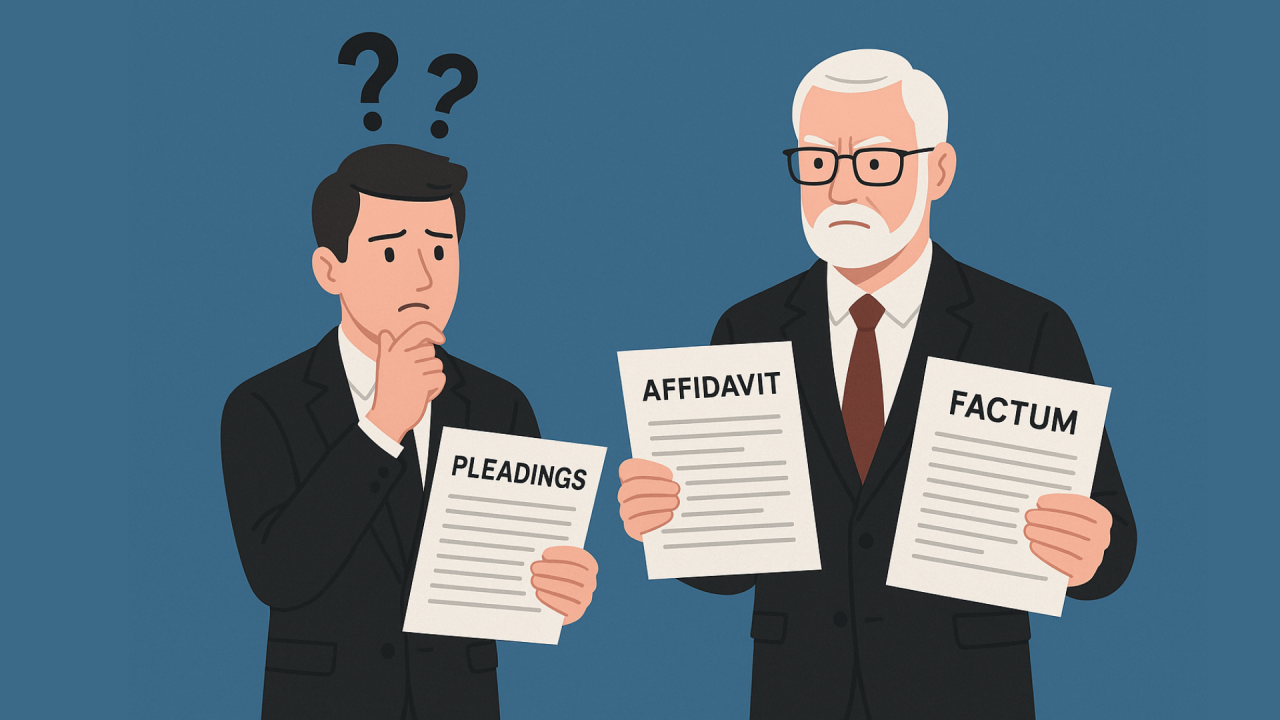

Fewer and fewer young lawyers go to trial and have a full appreciation of the litigation process from retainer to pleadings to discovery to conferences to motions to trial.
This is one reason why new lawyers do not know the difference between pleadings and evidence in a court proceeding.
These days, we see pleadings that look like affidavits, affidavits that look like oral arguments and facta that looks like a ‘cut-and-paste’ from all of the above.
Well…each document has a different purpose and, in fact, the Rules (and the judges) expect more from counsel.
In divorce proceedings, pleadings such as an Application for Divorce, Answer and Reply serve as the foundational framework of a case. They are formal statements submitted by each party outlining their claims, defenses, and the key issues in dispute. These documents not only frame the litigation, but also ensure that both parties comprehend the core matters to be addressed, what claims and facts are admitted and contested, what discovery is needed, what evidence is needed, what experts are needed and what litigation strategy to employ.
Pleadings must provide sufficient detail to inform the opposing party of the case they must respond to, yet they should not delve into the exhaustive specifics that characterize evidentiary details. Intricate details and substantiation of claims are reserved for the discovery and evidentiary stage of the case and trial.
Unlike pleadings, which outline the positions of the parties, evidence consists of the factual information and materials presented during motions and trial to support or refute the claims made in the pleadings.
The distinction between pleadings and evidence is crucial for divorce lawyers to grasp, as it ensures that initial allegations are articulated clearly without unnecessary details that are more appropriate for the evidentiary stage. This focuses the pleading and prevents a contest of factual debates that should be explored through the discovery process – oral and documentary (eg. Financial Disclosure and Affidavits Listing Documents).
In some cases, a party may seek particulars based on the pleadings where defending same is not feasible from the pleadings. However, excessive demands for particulars may be inappropriate at the pleading stage.
For divorce lawyers, knowledge of the importance of crafting pleadings that are clear, specific, and relevant without prematurely delving into evidentiary minutiae is critical. Divorce lawyers must appreciate that pleadings serve as a roadmap for litigation, guiding both parties and the court through the issues in dispute. This is one of the reasons why it is the pleadings alone that are provided to the trial judge in the Trial Record before trial.
By understanding the distinction between pleadings and evidence, lawyers can effectively navigate the complexities of divorce proceedings, ensuring that their clients’ cases are presented comprehensively and fairly from the outset.
Editorial note: This article was first published on LinkedIn in July 2025 and is republished here for reference.
Share this article on: