


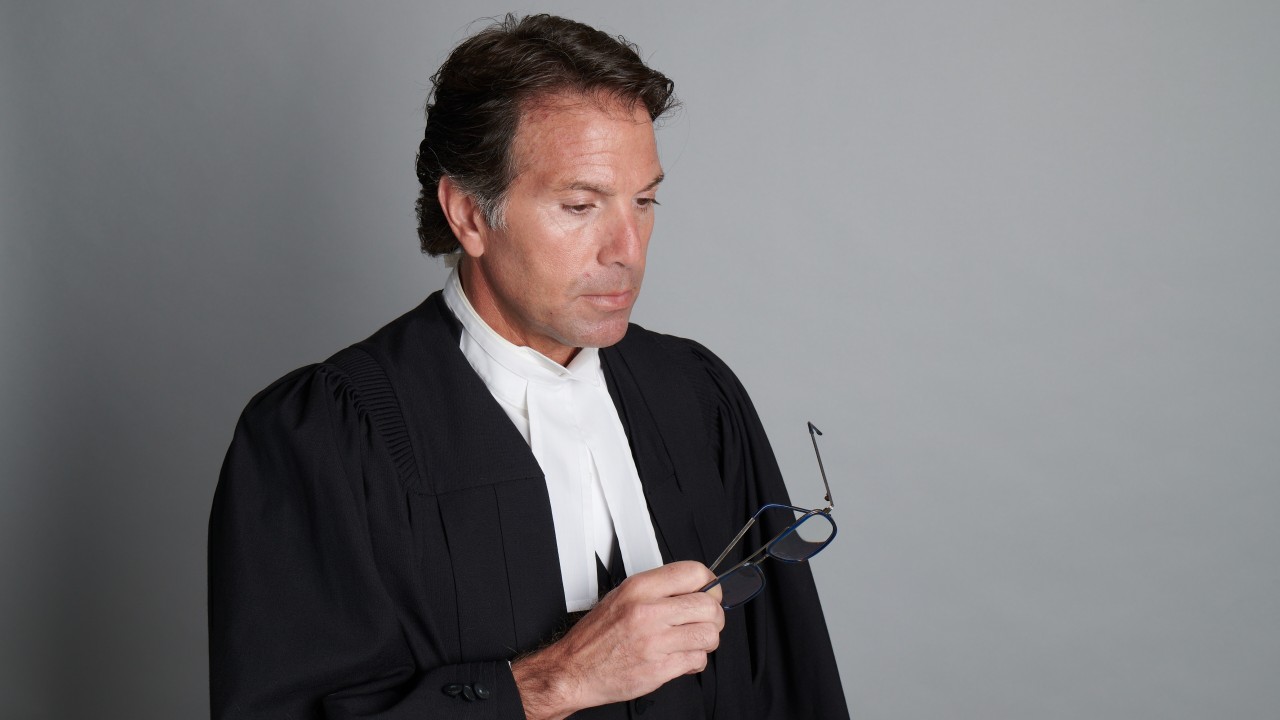

Nobody likes conflict. Not lawyers, not mediators, and not judges. But day in and day out, we see high conflict cases in family court. In fact, it has become a fairly regular occurrence for judges’ endorsements to begin with a description of the case as “This is a high conflict case” before rendering their analysis and decision.
After more than thirty years practicing family law, I have seen too many high conflict divorce cases. But more so, what I have seen in many of these cases are common features. Often, I see one spouse – often feeling hurt, angry and vengeful – taking extreme positions, making exaggerated allegations, and driving up the level of conflict. Equally, I see the other spouse – often victimized by such conduct – being left with one of two options – either surrender or fight back. When they do the latter, it is when the case becomes labelled “a high conflict case”.
These cases are often the ones we see in family court. The low to middle conflict cases often are resolved by two reasonable lawyers, negotiating a settlement or employing a mediator to arrive at a reasonable settlement. It is the high conflict cases that often result in a merry-go-round of litigation, including incessant motions and a trial. That has become a systemic part of the practice of family law.
But what need not be necessarily systemic is the reluctance of judges to identify and name the true source of conflict in high-conflict divorce cases. Too often, judges presiding over these cases will describe the matter as “high conflict” and, in doing so, paint both spouses with the same brush. The language becomes pluralistic: both parties, both sides, this contentious couple. The intent, I suspect, is to appear even-handed, unbiased and neutral. But in practice, this approach frequently obscures the truth – and justice suffers as a result.
In my decades of experience, I have seen time and again that high conflict does not always stem from two equally culpable spouses. In many cases, the conflict is driven overwhelmingly (sometimes entirely) by one party. One spouse makes outrageous allegations, withholds disclosure, violates court orders, manipulates the legal process and engages in bad-faith litigation tactics. The other spouse may simply be reacting, defending or attempting to survive the legal and emotional onslaught. Yet rather than calling out the wrongdoing party, judges often choose the safer path: labeling the case as high conflict rather than identifying the conduct that makes it so. This reluctance to “label the wrongdoer” has real and damaging consequences.
First, it enables continued misconduct. When the offending spouse sees that their behaviour is met not with accountability but with neutrality, they quickly learn an important lesson: there are no meaningful consequences. The judges’ unwillingness to assign responsibility becomes a silent permission slip to continue the very behaviour that created the conflict in the first place.
Second, it conditions bad behaviour. The wrongdoing spouse is effectively trained that obstruction, provocation and aggression are viable litigation strategies. Worse still, the aggressive lawyer representing the aggressive spouse (and they become well-known for this and are often sought out for this reputation) also learns that such tactics carry little risk. When the judges consistently treat misconduct as mutual dysfunction, the incentive to change disappears.
Third, it deepens the injustice to the non-offending spouse. The spouse who has acted reasonably, made the most concessions, acted with patience, complied with all rules, and attempted to resolve disputes in good faith finds themselves unfairly branded as “high conflict.” Their credibility is diminished, their legitimate grievances diluted, and their lived experience erased under the guise of judicial neutrality.
Finally, the damage extends beyond a single case or a single day in court. This pattern corrodes confidence in the family court system itself. When accountability is avoided in the name of balance, neutrality becomes indistinguishable from indifference. Justice is not achieved by treating unequal behaviour as equal; it is achieved by accurately identifying wrongdoing and responding to it appropriately.
Judges are not required to abandon impartiality to acknowledge reality. Calling out harmful conduct is not bias – it is adjudication. Naming the source of conflict is not favouritism – it is truth-telling. And without truth-telling, the family court system risks becoming a place where the loudest, most disruptive party thrives, while the reasonable one pays the price.
After thirty years in this field, my disappointment is not rooted in any single ruling or judge. It lies in a pattern – one that, if left unexamined, will continue to reward misconduct, punish restraint, and undermine the very principles of fairness that family courts are meant to uphold.
Neutrality should never mean silence in the face of wrongdoing.
This article was recently published in LexisNexis LAW360 at: https://www.law360.ca/ca/family/articles/2425231/when-a-judge-s-effort-to-appear-neutral-leads-to-injustice
Steve Benmor, B.Sc., LL.B., LL.M. (Family Law), C.S., Cert.F.Med., C.Arb., FDRP PC, is the founder and principal lawyer of Benmor Family Law Group, a boutique matrimonial law firm in downtown Toronto. He is a Certified Specialist in Family Law, a Certified Specialist in Parenting Coordination and was admitted as a Fellow to the prestigious International Academy of Family Lawyers. Steve is regularly retained as a Divorce Mediator/Arbitrator and Parenting Coordinator. Steve uses his 30 years of in-depth knowledge of family law, court-room experience and expert problem-solving skills in Divorce Mediation/Arbitration to help spouses reach fair, fast and cooperative divorce settlements without the financial losses, emotional costs and lengthy delays from divorce court.
Editorial note: This article was first published on LinkedIn in December 2025 and is republished here for reference.
Share this article on: