


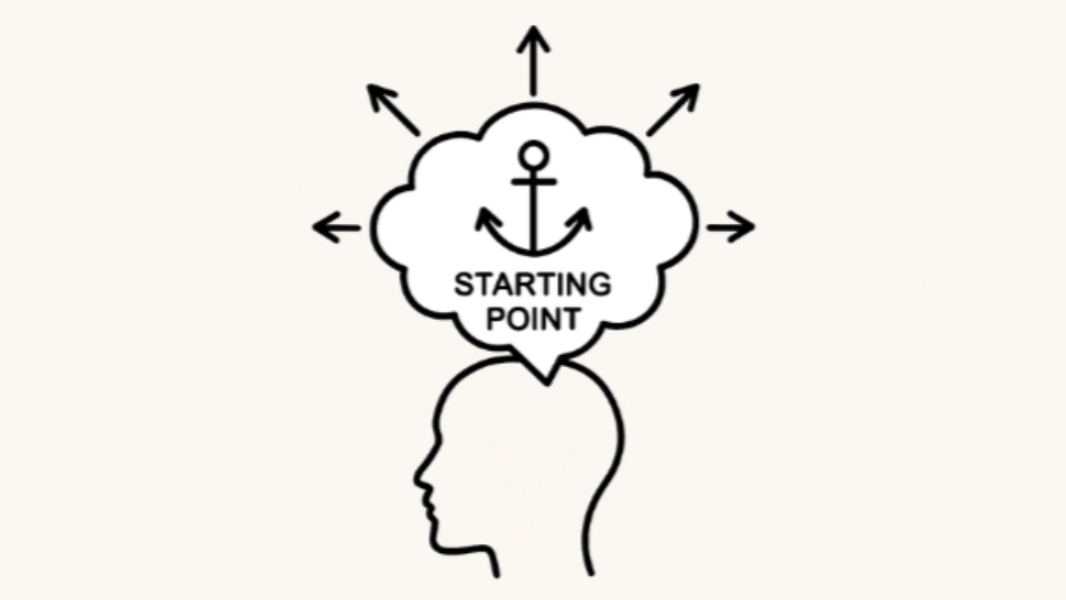

One common obstacle to a fair divorce settlement is a cognitive bias called The Anchoring Effect.
This psychological phenomenon describes the tendency to get stuck on one conclusion – the anchor – when making an important decision such as a divorce settlement.
For divorcing couples, this could mean fixating on a pre-conceived parenting schedule, or support amount or buyout of the matrimonial home.
So when negotiations begin, each spouse may begin with a firmly held expectation of what will, or should, occur and these views serve as anchors.
Divorce mediators are skilled at recognizing and mitigating this anchoring effect to foster productive negotiations. Unlike adversarial courtroom battles, mediation encourages open dialogue and cooperative problem-solving. Mediators facilitate discussions where both spouses can explore various options and revisit initial positions without the rigid constraints of legal procedures.
Research by negotiation scholars underscores the importance of setting specific and challenging goals in mediation. High-reaching goals can sometimes lead to dissatisfaction if not managed carefully,especially if they are not achieved or if they push spouses toward unrealistic expectations.
I personally have discovered success navigating the obstacles that The Anchoring Effect has on divorce settlements using the following tools:
1. Awareness: Recognizing the presence of anchoring bias, I set specific goals for negotiation outcomes that are within the range of possible settlement (ROPA).
2. Flexibility: Instead of leaving spouses to remain rigidly anchored to initial demands, I employflexible tactics such as prompting multiple proposals and exploring alternative solutions. This approach encourages both spouses to move away from fixed positions and explore creative solutions that meet underlying interests.
3. Evaluation: Because it is essential for both spouses to objectively evaluate proposals, independent of the initial anchor, I have involved financial experts, therapists, or lawyers to provide unbiased assessments of the proposed settlements.
4. Focus on Interests: I have shifted the focus away from the anchored conclusion to underlyinginterests such as financial security for the children and the spouses’ emotional well-being once a settlement is reached.
5. Buy into Mediation: I have invited the spouses to engage in mediation with good faith, sincerity and eagerness so that I can lead them to a successful divorce settlement and avoid adversarial court proceedings.
Overcoming The Anchoring Effect in divorce settlements requires a strategic approach that acknowledges the biases inherent in negotiation dynamics. By setting clear goals, remaining flexible, and focusing on shared interests, divorcing spouses and their legal representatives can navigate these challenges more effectively. Ultimately, this approach fosters a more cooperative environment where settlements are reached with greater satisfaction and fairness for all parties involved.
In conclusion, divorce mediators adeptly navigate the complexities of The Anchoring Effect in settlement negotiations by fostering open communication, managing expectations, and guiding parties towards equitable resolutions. By steering discussions away from rigid anchors and towards collaborative problem-solving, mediators ensure that divorce settlements are not only legally sound but also emotionally satisfying for the spouses and children involved. Divorce is inherently challenging, but with a skilled mediator, couples can navigate these waters with clarity and fairness, transcending cognitive biases to achieve resolutions that pave the way for new beginnings.
Editorial note: This article was first published on LinkedIn in June 2025 and is republished here for reference.
Share this article on: