


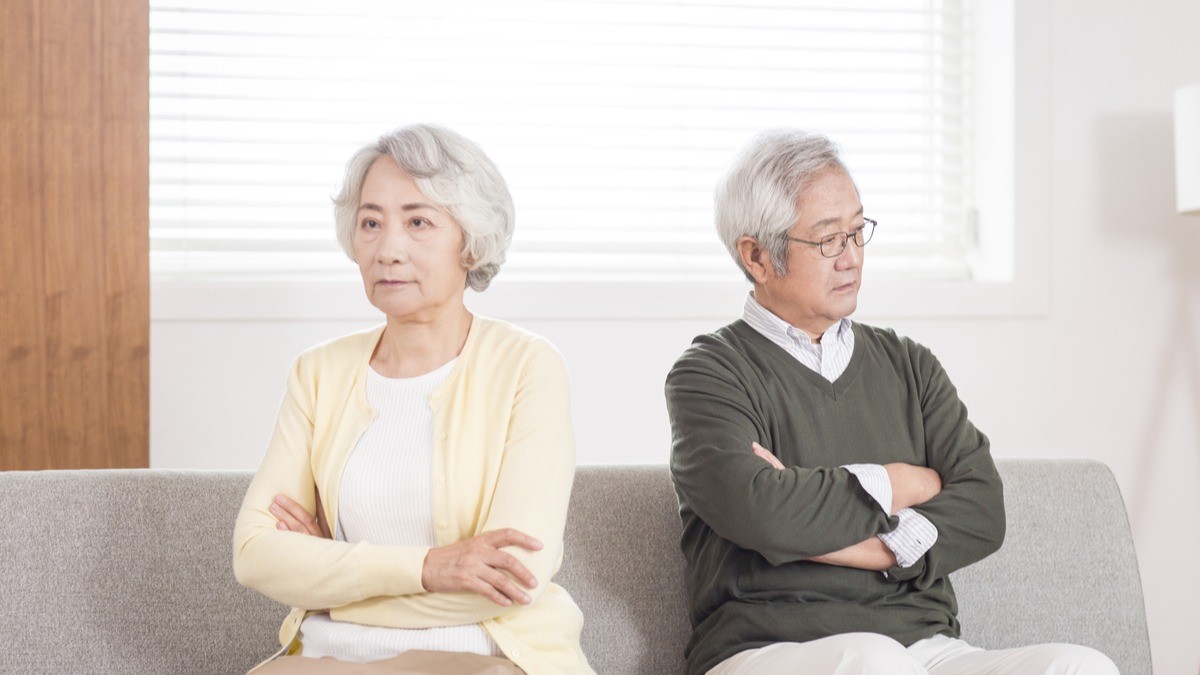

For decades, the public story of Korean divorces was told through the lens of a young marriage: couples who married when young, discovered incompatibility, and separated before the marriage had truly matured. Now, however, Korea’s latest divorce statistics tell a very different story. In 2025, for the first time since the country began compiling these statistics in 1990, divorces among couples married for 30 years or more exceeded divorces among couples married for less than 5 years. There were 15,628 divorces among couples married more than 3 decades, compared with 14,392 divorces among couples married less than 5 years.
This is more than a statistical anomaly. It is a social signal. It suggests that divorce in South Korea is no longer primarily a story about unstable young marriages. Increasingly, it is a story about long marriages reaching their expiry date only after the children are grown, the mortgage has been paid down, the public duties have been performed, and one or both spouses finally ask a question they may have suppressed for decades: Is this how I want to live the rest of my life?
In South Korea, the term often used is “twilight divorce” or “dusk divorce” – the dissolution of a marriage late in life, often after 30 years or more.
The trend has been building for years. In 1990, there were only 368 divorces among couples married for 30 years or more. By contrast, there were 18,053 divorces among couples married less than 5 years – nearly 49 times higher. Through the 2000’s, newlywed divorces still dramatically outnumbered twilight divorces. But the gap kept narrowing. By 2018, the difference had fallen below 10,000 cases. By 2024, the gap was reportedly only 114 cases. In 2025, twilight divorce overtook newlywed divorce altogether.
The deeper story is not simply that more older people are divorcing. It is that, in South Korea, the meaning of marriage, gender, retirement, property, and personal autonomy is changing. One of the most important parts of this story is that South Korea is not experiencing a general divorce explosion. In fact, total divorces declined in 2025. South Korea recorded approximately 88,100 divorces, down 3.3% from the previous year, continuing a longer downward trend. The crude divorce rate fell to 1.7 divorces per 1,000 people, a level last seen decades ago.
That makes the twilight divorce trend even more significant.
It means the centre of gravity is shifting. Divorce may be becoming less common among younger couples, but more visible among older ones. The question is no longer simply, “Why are people divorcing?” The better question is: “Who now has the practical, emotional, and financial ability to leave?”
South Korea is aging rapidly. The proportion of people aged 50 and older has nearly doubled over the past 20 years, while the proportion of people in their 20’s and 30’s has declined. That alone changes the pool of people who are married, separating, or contemplating divorce. There are simply more older married people than before, and fewer young newlyweds. The number of young couples who could become “newlywed divorce” statistics has declined, while the number of long-married couples has increased.
But demographics are only the surface explanation. The more powerful explanation is social. Historically, many women in long marriages stayed because they had little practical alternative. They may have had limited income, limited property in their own name, limited social permission to leave, and a strong cultural expectation that marital endurance was a virtue.
That is changing. The increase in highly educated women with economic resources has made late-life divorce more realistic. A woman in her 50’s, 60’s or 70’s may no longer see herself as financially trapped in a marriage that has long since become emotionally empty, controlling, disrespectful or merely functional. The counseling data supports this shift. According to figures released by the Korea Family Law Counseling Center, women aged 60 and older accounted for 22% of the 4,013 divorce consultations involving women last year. In 2005, that figure was only 6%. In other words, the proportion has nearly quadrupled over 20 years. That is not just a legal trend. It is a generational reckoning.
Another overlooked factor is male adaptation. In earlier generations, some men may have resisted divorce not only because of finances or reputation, but because they were heavily dependent on their wives for domestic functioning: meals, laundry, household management, family logistics, emotional labour and social organization. As more men become accustomed to living independently, managing households, preparing meals, and caring for themselves, the practical fear of post-divorce life may be lower than it once was.
There is also a property story. Where housing values rise substantially, divorce can become financially possible in a way it was not before. A couple who owns a valuable home may be able to divide the equity and each leave with enough capital to establish a separate life in a smaller separate home. Rising real estate prices can therefore reduce one of the traditional barriers to divorce: the fear that separation will leave both spouses financially insecure.
What makes South Korea’s divorce trend so compelling is that it reverses the old assumption that divorce is mainly a failure of immature marriages. Twilight divorce suggests something more complex. Some marriages do not end because they suddenly fail. They end because they succeeded at one stage of life, and then lost their purpose at another.
A couple may have stayed together to raise children. They may have built property. They may have supported aging parents. They may have complied with social expectations. They may have maintained appearances. They may have functioned as a household, even if they stopped functioning as a partnership. Then retirement arrives. The children leave. The social script changes. The question becomes less about obligation and more about dignity.
For many older Korean spouses, especially women, divorce may not represent impulsiveness. It may represent delayed self-determination. South Korea’s divorce story is not simply that more older couples are ending their marriages. It is that the social contract of marriage is changing. South Korea’s divorce statistics are not just about endings. They are about older Koreans claiming the right to a different final chapter.
Steve Benmor, B.Sc., LL.B., LL.M. (Family Law), C.S., Cert.F.Med., C.Arb., FDRP PC, Acc.D.C., is a full-time Divorce Mediator/Arbitrator and principal lawyer of Benmor Family Law Group, a boutique matrimonial law firm in downtown Toronto. He is a Certified Specialist in Family Law, a Certified Specialist in Parenting Coordination and was admitted as a Fellow to the prestigious International Academy of Family Lawyers. Steve is regularly retained as a Divorce Mediator/Arbitrator and Parenting Coordinator. Steve uses his 30 years of in-depth knowledge of family law, court-room experience and expert problem-solving skills in Divorce Mediation/Arbitration to help spouses reach fair, fast and cooperative divorce settlements without the financial losses, emotional costs and lengthy delays from divorce court.
Share this article on: