


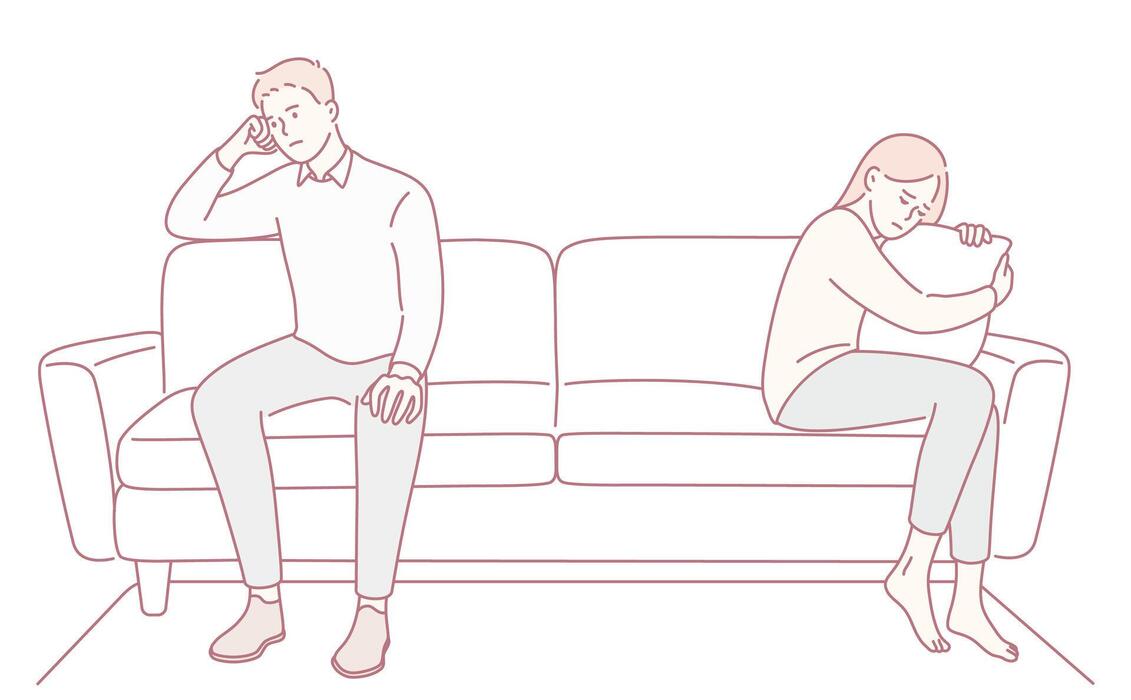

From the vantage point of a Family Mediator/Arbitrator, one of the most overlooked drivers of mid-life divorce is perimenopause. It is rarely identified, rarely discussed, and often misunderstood by men, lawyers, therapists, and even the women experiencing it. Yet in many mid-life separations, the factual pattern is strikingly familiar: hormonal fluctuation results in sleep disruption, anxiety, irritability, cognitive changes, emotional withdrawal, diminished sexual intimacy, social isolation, increased marital conflict, and, not so shockingly, DIVORCE.
What presents to me in mediation as a “breakdown of the marriage” or “irreconcilable differences” is often neither a breakdown nor differences. It is frequently the culmination of physiological change, emotional exhaustion, and relational displacement that has been unwittingly engineered by biology.
Perimenopause is not merely a health event. It is a marital event. Hormonal fluctuations affect mood stability, sleep, capacity, and stress tolerance. Women experience night sweats, fatigue, anxiety, cognitive fog, restlessness, and heightened vulnerability to depression. For high-functioning professional women in particular, these changes can be profoundly destabilizing because they arrive at precisely the stage of life when the demands of work, caregiving, ageing parents, adolescent children, and long-term marriage often collide. A woman who has spent decades functioning at a high level may suddenly find that the strategies that once worked no longer do. When this happens inside a marriage, the consequences can be significant.
In my work as a Family Mediator/Arbitrator, I often see couples who misname the problem. One spouse experiences the other as “angry,” “checked out,” “unreasonable,” or “not the same person anymore.” The other feels unseen, depleted, ashamed, and increasingly incapable of explaining what is happening. The marital narrative then hardens around BLAME. He thinks she has become impossible. She thinks he has become indifferent, critical, or emotionally unsafe. Neither fully understands that biology may be amplifying stress, eroding resilience, and impairing communication. That does not excuse hurtful conduct, nor does it reduce every failing marriage to hormones. But it does mean that, in many mid-life divorces, the legal conflict is sitting on top of an unaddressed biopsychosocial reality.
What makes perimenopause especially potent in the divorce context is the way it interacts with mood, communication and family life. Sleep disturbance alone can increase anxiety, irritability, and emotional reactivity. When declining estrogen and progesterone levels are added to the mix, together with work pressure and family demands, the result can be a relationship environment marked by volatility, distance, and misunderstanding. Some women turn, quietly and incrementally, to alcohol, sleeping pills, or other substances to regulate mood, restore rest, or simply get through the day. What begins as coping can become dependency. The research notes that alcohol and sedative use may become intertwined with attempts to manage anxiety, depression, and sleep disturbance, and that these coping patterns can affect relationships, emotional equilibrium, and overall management of life.
In my Mediation/Arbitration, I often hear the husband blame the wife for becoming an alcoholic or pill-dependent. Even the term “addict” is used.
This is where the Mediator/Arbitrator’s lens becomes especially important. By the time parties arrive in my dispute resolution room, the marriage may already be burdened by broken trust, emotional distance, secrecy, resentment, and a sense that the other spouse has become unrecognizable. If self-medication has entered the picture, the damage can extend further: reduced reliability, impaired communication, greater withdrawal, shame, and family instability. Children, particularly teenagers, often absorb this tension acutely. They may not understand perimenopause, but they certainly experience the household atmosphere it can produce. I often see the teen child align with the father (against the mother) in divorce. What the law later sees as a family dispute, may in fact be the legal aftershock after years of hormonal fluctuations.
Another reason perimenopause is such a powerful, hidden driver of mid-life divorce is stigma. The public discourse remains shallow (see @AndreaDon below). Menopause is still too often treated as a punchline, an embarrassment, or an inconvenience rather than a serious stage of life that can alter mental and emotional functioning for an extended period. For women in leadership roles, there may be an added pressure to appear composed, sharp, and fully in control. That pressure can produce masking: concealing symptoms, minimizing distress, and normalizing unhealthy coping mechanisms. In a marriage, that silence can be catastrophic. A spouse cannot respond compassionately to what has never been named. And once mutual resentment becomes entrenched, the relationship may move from repairable strain to legal breakdown.
To say that perimenopause is a leading driver of mid-life divorce is not to say that women are the problem. Quite the opposite. The problem is often the failure of couples (men and women) and professionals (therapists, physicians and lawyers) to recognize what is occurring early enough, and to respond to it with intelligence and compassion. In many cases, the marriage has other vulnerabilities: longstanding communication deficits, unequal emotional labour, poor conflict management, intimacy problems, unresolved trauma, or different expectations about ageing and identity. Perimenopause does not create all of those issues. But it can expose them, intensify them, and remove the coping cushion that once kept the marriage functioning. In that sense, it is often not the sole cause of the divorce, but the accelerant that turns quiet dissatisfaction into open fracture.
For professionals, this has practical implications. We should become more careful before reducing a mid-life separation to simplistic labels such as incompatibility, personality change, or empty-nest drift. We should listen for the markers: chronic sleep disruption, escalating anxiety, mood volatility, diminished concentration, increased alcohol use, unexplained emotional withdrawal, and conflict that seems disproportionate to the issues being debated. We should also encourage multidisciplinary support where appropriate, including medical evaluation, mental health support, addiction treatment if necessary, and a process design in Mediation/Arbitration that allows for pacing, patience, and psychological safety. Not every marriage affected by perimenopause should end. Some require treatment, understanding, and time before life-altering legal decisions are made.
As a Family Mediator/Arbitrator, I would go further: one of the great missed opportunities in mid-life family breakdown is that couples often seek legal help before they seek understanding. By the time they do, each spouse has already constructed a case against the other. But a legal case is not always the same thing as the truth of what happened to the marriage.
Sometimes the truth is that a woman was moving through an unknown or under-recognized neurohormonal transition while carrying immense professional and personal demands, and the marriage simply did not have the language, insight, or support to withstand it. When that happens, perimenopause becomes not a footnote to the divorce, but one of its central drivers. And until family professionals begin to treat it that way, we will continue to misread many mid-life divorces that are, at their core, as much about health, identity, and unspoken suffering as they are about law.
Thanks to leaders such as @AndreaDon and Samantha Graff Benmor this issue is gaining wider public attention. Samantha and I will be attending this on May 7 and so should you: https://www.leahposlunstheatre.com/event/perimenopause-menopause-and-beyond-the-conversation-we-need-to-have
Share this article on: