



There are evenings in a professional life that you remember – not because of the food or the venue or the formality of the occasion – but because something was said that landed differently than you expected. Something that made you sit back in your chair and think: that is exactly it. That is exactly what I have been trying to do, and I have never heard it described that way before.
The 2026 Award Ceremony of the Toronto Lawyers Association was one of those evenings for me. And the moment that made it so came courtesy of a speaker whose biography alone signals that he is not a conventional thinker, and whose opening address confirmed it beyond any doubt.
Before I get to that moment, let me say something about the organization that made the evening possible, because the Toronto Lawyers Association deserves to be celebrated in its own right and not merely as the backdrop for a speech, however remarkable.
The TLA has long represented something more than a professional association. It represents a community – a gathering of lawyers who understand that the practice of law, at its best, is not a solitary pursuit. It is built in conversation, sharpened through exchange, and elevated by the kind of peer recognition that reminds practitioners why they entered this profession in the first place. The membership of the TLA reflects the extraordinary breadth and depth of legal talent that makes Toronto one of the most sophisticated legal markets in the world. Corporate counsel and litigators, mediators and arbitrators, family lawyers and estates practitioners, innovators and traditionalists – all of them occupying the same room, recognizing one another’s contributions, and collectively raising the standard of what it means to practice law in this city.
The award ceremony is the annual expression of that commitment. It is an evening that says, plainly and publicly, that excellence in law matters – that it is worth identifying, worth naming, and worth holding up as a model for others to aspire to. In a profession that can be relentlessly demanding and privately discouraging, that kind of public affirmation is not a small thing.
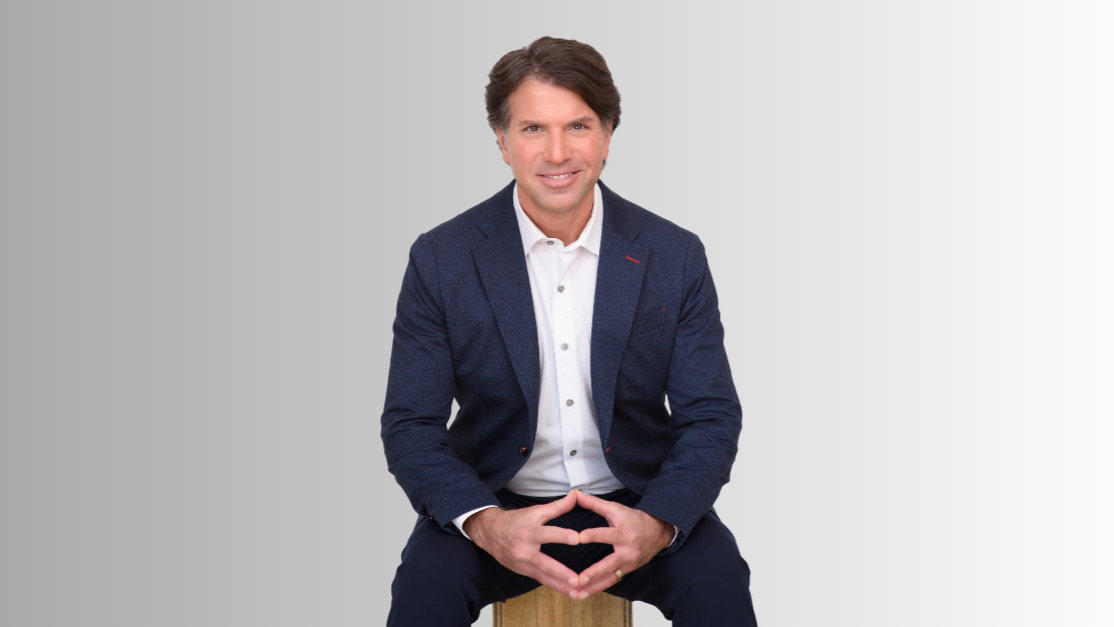
The choice of Marlon Hylton as a speaker for the 2026 ceremony was, in retrospect, entirely fitting – though I suspect that for some in the audience, his opening address arrived as a genuine surprise. Marlon is not a conventional after-dinner speaker, because Marlon Hylton is not a conventional lawyer. His biography is the story of someone who looked at the legal profession from the inside, identified what was missing, and then built it.
He began where many talented lawyers begin: at a Bay Street firm, navigating the demanding and highly competitive world of complex commercial litigation. He was recognized by Best Lawyers as a leading practitioner in that field, and by Who’s Who Legal as both a global thought leader and a national leader in complex commercial litigation and e-discovery – designations that speak not to longevity but to genuine distinction. He was, by any conventional measure, succeeding.
But Marlon Hylton is not someone who is satisfied by conventional measures. From within the firm, he identified a gap – not a small procedural gap, but a structural one. The market lacked a seamless, integrated platform capable of delivering sophisticated legal expertise alongside deep technology knowledge and flexible resourcing models, all under one roof, all fluent in the same language. He saw that gap clearly enough to do something that requires a specific kind of courage that lawyers are not always celebrated for: he left the platform he had built and built a new one entirely on his own terms.
The result is INNOV-8 Data Counsel and INNOV-8 Legal Inc. – simultaneously a law firm and a technology company, and therefore neither in the way those categories are traditionally understood. INNOV-8 was conceived not as a hybrid or a compromise between two worlds but as an entirely new kind of entity: one that combines a deep and genuine understanding of legal culture with serious business and technology expertise, producing solutions that are innovative without being alien to the profession they serve. It is, in the truest sense, a firm built at the intersection – and that intersection, as Marlon would explain to the audience at the TLA ceremony, is precisely where the most important legal work of the coming generation will be done.
Marlon’s opening address was built around an organizing idea that was simple enough to follow and layered enough to stay with you long after the evening ended. He chose to describe excellence in law through letters – not metaphors or frameworks or the kind of abstract professional language that fills conference programs – but actual letters of the alphabet, each one carrying a specific and deliberate meaning.
He spoke of the letter I – for the individual excellence that every lawyer must develop as the irreducible foundation of their practice. The craft, the discipline, the mastery of doctrine and procedure and strategy that no technology and no team can substitute for. The I, he suggested, is non-negotiable. Without it, nothing else holds.
He spoke of the letter T – a shape that has become familiar in professional development conversations as a representation of breadth layered on depth: the horizontal bar representing the range of knowledge a lawyer brings to their work across disciplines and contexts, sitting atop the vertical bar of their core expertise. The T-shaped lawyer, in Marlon’s framing, is the modern professional – someone who can move laterally across a client’s world while remaining rooted in genuine specialization.
But it was when Marlon turned to the letter M that the room shifted. Because the M, in his telling, was something altogether different from what came before it. It was not simply an extension of the T or a doubling of individual excellence. It was a structural argument about what legal excellence looks like at its highest level – and it is the idea I want to spend time with here, because it is the one that has stayed with me most persistently.
Look at the letter M as a physical form. It is defined by its two vertical bars – two distinct uprights, of equal height, of equal integrity, connected at the top by the line that draws them together. Marlon used this image to describe a category of lawyer that he argued represents the frontier of legal excellence: the lawyer who, in the course of developing genuine mastery in law, simultaneously pursues excellence in a collateral discipline – a second vertical bar, built with the same seriousness and commitment as the first – and then learns to draw those two pillars together in service of their clients.
He called these lawyers mavens – not in the diluted, casual sense the word sometimes carries, but in its original sense: someone who has accumulated knowledge and expertise so deep and so genuine that they become a resource others turn to not merely for answers but for orientation. A maven in law, in Marlon’s framework, is not simply someone who knows a great deal about their practice area. It is someone whose legal mastery is animated and elevated by serious expertise in something else – something that changes how they see their clients’ problems, how they construct their solutions, and how they deliver their services.
The two vertical bars of the M, he explained, are not parallel lives or competing identities. They are complementary disciplines that, when developed with intention and integrated with skill, produce a quality of legal service that neither bar could generate alone. The ingenuity, creativity, and imagination that a lawyer brings from their collateral discipline – whether that is technology, finance, psychology, architecture, medicine, or any other domain of serious knowledge – does not merely add to their legal practice. It transforms it.
It was, as I said, the moment the room shifted.
I want to be transparent about why Marlon’s framing landed the way it did for me, because it was not simply intellectual appreciation. It was recognition. The kind of recognition you feel when someone articulates in clear language something you have been doing instinctively, without ever having a framework to describe it.
My practice is in family mediation and arbitration, with a particular focus on high net worth families navigating separation and divorce. It is a field that rewards empathy and process skill and the ability to hold difficult conversations in a structured and productive way. Those competencies matter enormously, and I have spent years developing them. But I came to understand, relatively early in my practice, that serving high net worth families in the way they genuinely need to be served requires something more than mediation expertise.
The families I work with do not come to the table with simple balance sheets. They come with privately held corporations, with family trusts that have operated across multiple generations, with estate plans that are intertwined with their business succession strategies, with tax structures that their separation will inevitably disturb in ways that neither they nor their lawyers have fully mapped. The pain points of a high net worth family in crisis are not simply emotional – they are deeply technical, and the technical dimensions are often invisible to professionals who have not spent serious time in corporate, tax, estates, and trust matters.
And so I built my second bar.
Alongside my development as a mediator and arbitrator, I immersed myself in the corporate, tax, estates, and trust frameworks that govern the financial lives of the clients I serve. Not superficially – not at the level of a generalist who knows enough to ask the right questions and refer the rest. At the level of genuine fluency. The kind of fluency that allows me, when a family trust becomes a point of contention in a mediation, to understand not just its emotional significance to the parties but its structural mechanics, its tax implications, and the range of options available for addressing it in a settlement. The kind of fluency that allows me to recognize when a proposed property division will trigger a corporate reorganization issue that nobody in the room has yet identified.
This is what Marlon was describing. The two vertical bars of my practice – mediation and arbitration on one side, corporate, tax, estates, and trust on the other – are not two separate careers running in parallel. They are two disciplines that I have built and maintained with equal seriousness, and that I draw together in service of a category of client whose needs demand exactly that integration. The creativity and imagination that comes from deep familiarity with the technical landscape of a high net worth family’s financial life makes me a fundamentally different mediator than I would be without it. And the process skills and conflict navigation capacity that come from my mediation practice make me a fundamentally different technical advisor than I would be if that were all I did.
This is the M. This is what Marlon named.
I want to close by returning to where I began: the Toronto Lawyers Association and the community it represents.
What the TLA does, at its best, is create the conditions for exactly the kind of professional development and cross-pollination that Marlon Hylton was celebrating in his address. When lawyers gather in a room together – not to compete or to posture, but to recognize one another and to share in the elevation of the profession – something generative happens. Ideas cross-pollinate.
Practitioners who work in different areas of law discover unexpected common ground. A technology innovator and a family mediator end up in conversation and realize they are asking the same questions from different directions.
The 2026 ceremony exemplified this. In honouring the members of this community who have pursued excellence – including the award recipients Tom Curry Gerald Chan and Dasha Peregoudova – not just competently but imaginatively – not just within the boundaries of their designated practice areas but at the creative edges of what legal service can be – the TLA sent a message that I believe the profession needs to hear more often and more loudly.
Excellence in law is not only technical. It is not only doctrinal. It is not satisfied by mastering what already exists. The lawyers the TLA celebrated this year, and the ideas that Marlon Hylton put into the room with such clarity and conviction, point toward something more demanding and more exciting than that: a vision of legal practice in which the most important thing a lawyer can do is build their second bar with as much seriousness and devotion as they built their first – and then learn to draw the two together in ways that serve their clients at a level that neither bar could reach alone.
That is the M and the Toronto Lawyers Association, in gathering this community year after year and holding up the people who embody it, is doing something genuinely important.
It is showing us what the letter looks like when it is fully formed.
Steve Benmor, B.Sc., LL.B., LL.M. (Family Law), C.S., Cert.F.Med., C.Arb., FDRP PC, Acc.D.C., is a full-time Divorce Mediator/Arbitrator and principal lawyer of Benmor Family Law Group, a boutique matrimonial law firm in downtown Toronto. He is a Certified Specialist in Family Law, a Certified Specialist in Parenting Coordination and was admitted as a Fellow to the prestigious International Academy of Family Lawyers. Steve is regularly retained as a Divorce Mediator/Arbitrator and Parenting Coordinator. Steve uses his 30 years of in-depth knowledge of family law, court-room experience and expert problem-solving skills in Divorce Mediation/Arbitration to help spouses reach fair, fast and cooperative divorce settlements without the financial losses, emotional costs and lengthy delays from divorce court.
Share this article on: